Author: Ruby van der Wekken, Oma maa food cooperative Finland / RIPESS Europe
It’s been estimated that one fifth of Europe’s population has no access to adequate food – which is defined as diverse, nutritious, safe and culturally appropriate food – whilst small scale farmers are struggling to make a living, there is a decline in farms, and new farmers are struggling with access to land. This stark reality was highlighted by Almudena García Sastre, of FIAN Europe at the beginning of a webinar organised by Ecolise in February on food systems in general and on the‘Good Food for all’ European Citizens Initiative (ECI) in particular.
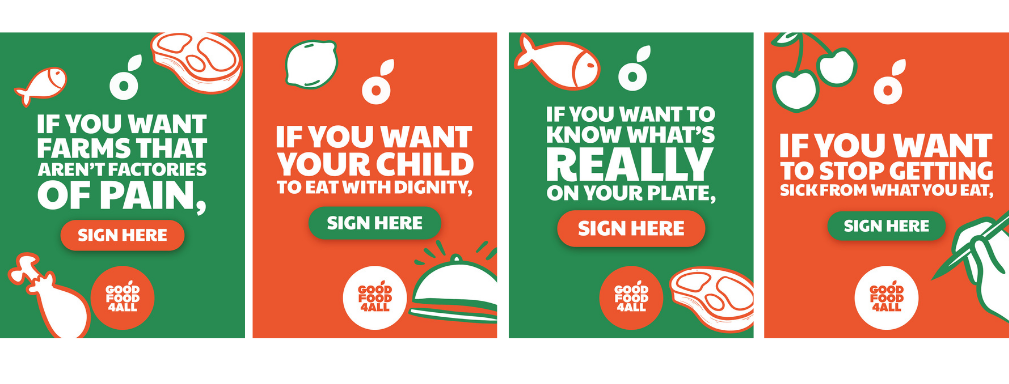
The ‘Good Food for all’ ECI is currently supported by a coalition of more than 300 member organisations. The campaign sets out to collect one million valid signatures across the EU aiming at stronger legal protection of the right to food in the EU, framing food as a political, economic, and social right, fostering unified European civil society mobilisation for the promotion of the realization of the right to adequate food in EU, and promoting food dignity, justice, and sustainability.
“This is not a petition. It is a legal instrument. If we reach one million signatures across at least seven EU countries, the European Commission must respond and open a formal process. That is the door. But we have to push it open*”
Why (bother to) sign the ‘Good Food for All’ ECI?
Food is a human right. All EU member states have ratified the Convention on Economic, Social and Cultural rights to food, and carry the obligation to guarantee the right to food. However, as Almudena underlined, there is a lack of operationalisation in the domestic implementation of public policies supporting this right. Instead, food policy is legislated predominantly by the free movement of food. Citizens are treated as consumers, and proposed solutions rely on their purchasing power as the main driver of change. This market driven approach risks perpetuating injustices, leaving people with little or no agency to decide over their food systems and deepen inequalities.
There is furthermore no coherent approach to food, Almudena continued. On the one hand, there are ambitious local food strategies, but on the other hand, there is a lack of competence to implement decisions. Decisions will be built on visions for an agroecological transition, yet they remain heavily shaped, and at times restricted, by the content of the Common Agricultural Policy. The ECI on the Right to Food then gives a comprehensive perspective by addressing how food is produced, distributed, and consumed. It importantly brings together different movements working around Food (related) issues as environmental activists, rural workers, consumers, and social justice movements, whilst legitimising their grassroot demands.
“The right to food will not appear in European law because it is morally correct. It will appear because enough people demand it, formally, through the European Citizens’ Initiative*”.
During the online event, Ramona Duminicioiu from Eco Ruralis opened up more on the CAP, which she described as allowing rich farmers to swim more in privileges while small farmers face more disadvantages. As the largest agricultural budget in the EU, the CAP reflects the alignment of powerful economic interests. Public funds are distributed primarily based on hectares rather than on the fulfilment of human rights obligations. A shift is therefore needed in how we understand food and food policies. The Right to Food ECI brings to the forefront an approach in which food is understood as a life enabler, connecting the dots between nutrition, culture, knowledge, and participatory processes.
The ECI systematically addresses the food system and formalises the obligations which states have, provides tools, focuses on addressing inequalities, and puts the focus back on human rights. The ECI also seeks, via different demands, to operationalise a European Food Council to promote a Common Food Policy setting out the future of agriculture.
In response to concerns raised during the event that, even if it reaches the required threshold, the ‘Good for All’ ECI still risks being met with disdain for its social and ecological justice objectives, Romana answered that we have to trust the process. The ECI is not an adhoc collection of signatures, but a legal instrument which will have to be dealt with.
The ECI is also seen as a tool to mobilise and unite on a country level. As Drazen Simlesa of RIPESS Europe pointed out, there are a lot of initiatives around food on the ground, but we need to have them bear on public policy in order to bring about societal change. Drazen framed the ECI as being importantly about a refusal to go by the narrative that security equals militarisation, and instead encourages us to put our focus on peace building practices as food system change.
Sign the ‘Good Food for All’ European Citizens Initiative
*From a ‘Good Food for All’ campaign e-mail. For clarity, the ECI is a campaign, which when passing the 1 million signatures bar will have been a first step to work towards legal instruments furthering healthy, just and sustainable food systems in the EU.