Author: Ripess Europe
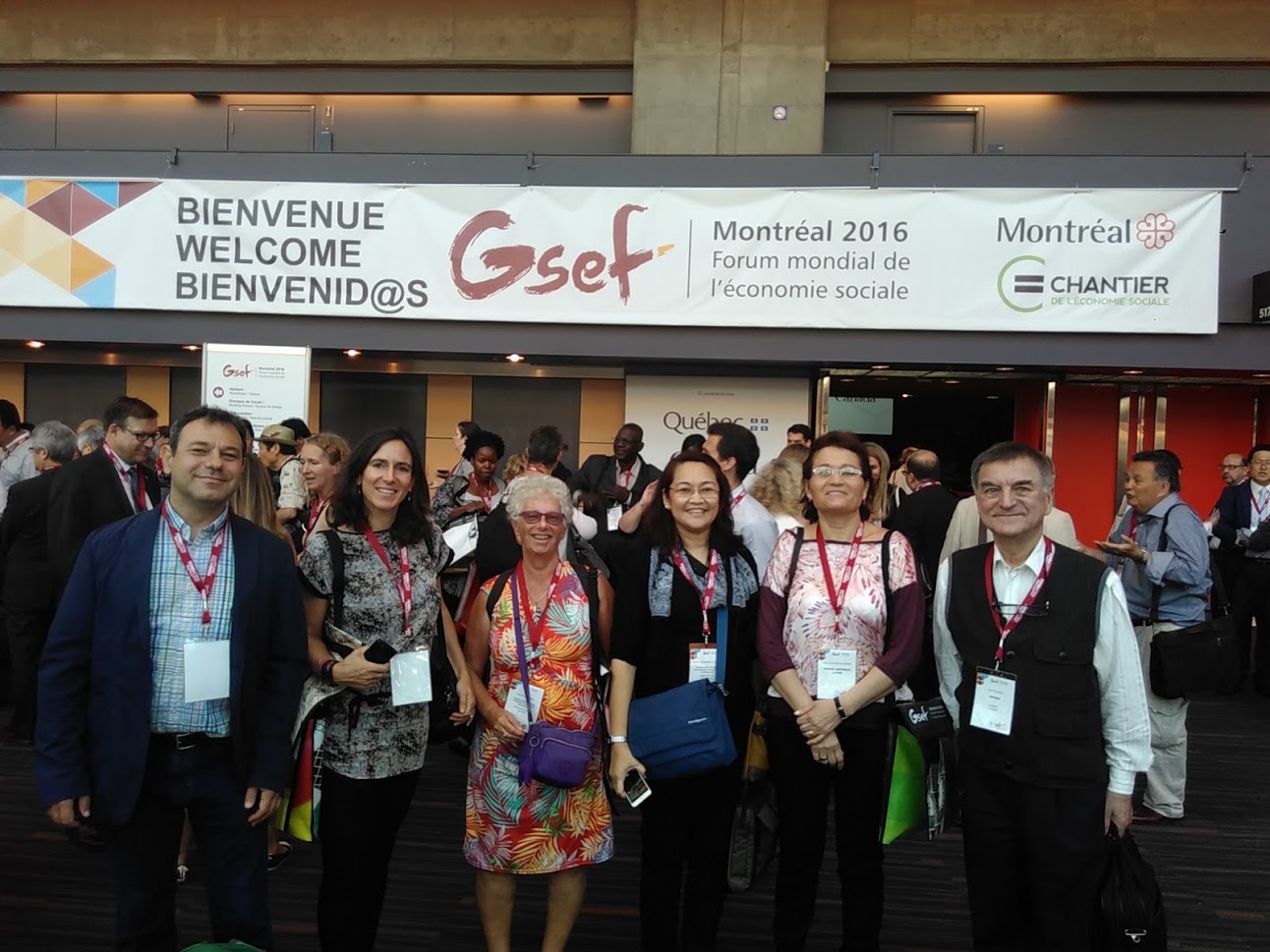
The Global Social and Solidarity Economy Forum (GSEF) is a major international gathering dedicated to advancing the social and solidarity economy (SSE). The 7th edition, Bordeaux GSEF 2025, will be held from 29 to 31 October 2025, marking the first time the Forum is hosted in France. Previous editions have taken place in cities such as Seoul, Montréal, Bilbao, Mexico City and Dakar. GSEF was established to provide a recurring international platform where actors in the SSE ecosystem, from civil society, local governments, research institutions and social enterprises, can convene, exchange, influence policy and build alliances. The core mission of GSEF is to promote recognition, scaling and institutional consolidation of the social and solidarity economy as a transformative alternative to conventional economic models.
At Bordeaux 2025, the overarching theme is: “The SSE, a precondition for a just transition towards resilient territories and the well-being of their inhabitants”
Through this lens, the Forum aims to (i) support transitions in territories toward equitable, resilient development; (ii) reinforce links between SSE actors, public authorities and movements for social justice; (iii) foster innovation, knowledge-sharing and collective action; and (iv) contribute to policy orientations and advocacy at multiple scales (local, national, global).
The Bordeaux Forum will unfold across three days of main programming (plus one “territorial pathways” day) at the Palais 2 l’Atlantique and additional sites like Hangar 14 and Cité Bleue (youth hub) in Bordeaux’s city area.
- The main site will host 13 plenary sessions, 169 round tables, a networking / exhibition area, partner stands, and a live radio studio.
- Specific institutional events include the GSEF Network General Assembly, CIRIEC workshops, and the closing CIRIEC International Conference on SSE research.
- Evening cultural programming, public-oriented sessions, and open activities across the city will connect the Forum to a broader public.
The opening plenary, scheduled for 29 October, will set the stage for Bordeaux GSEF 2025 by placing this 7th Global Forum of the Social and Solidarity Economy (SSE) within the broader context of global transitions. The session will feature a keynote lecture and high-level panels bringing together political leaders, territorial representatives and SSE experts to discuss how public policy and regional strategies can accelerate just and sustainable transformations in territories.
Over the following three days, the Forum will offer a rich and diverse programme of thematic plenaries, panel debates and round tables, enabling participants from all continents to share experiences, best practices and innovative approaches across the Forum’s main thematic axes. These exchanges will highlight concrete solutions and partnerships that demonstrate how the SSE contributes to economic resilience, social cohesion and ecological transition.
Complementing these discussions, CIRIEC workshops and the International Social Economy Research Conference will take place from 29 October, strengthening the connection between academic research, policy-making and field practice. On 30 October, the GSEF Network General Assembly will provide an important governance moment for members to reflect on strategic priorities, partnerships and the legacy of the Forum.
The event will culminate on 31 October with the closing plenary, a moment of synthesis and commitment. Participants will collectively adopt the Bordeaux Declaration, setting out shared principles and future goals for the SSE movement. The session will also include the symbolic passing of the torch to the next host city, alongside the presentation of an International Youth Declaration for the SSE, affirming the central role of young people in shaping a fairer and more sustainable global economy.
The round tables and sessions are organized around seven thematic “pathways” (axes) that reflect priority challenges and opportunities:
- Financing the transition — exploring innovative, inclusive and solidarity-based finance mechanisms to support SSE initiatives.
- Ecological transition — aligning social justice and environmental sustainability through SSE-led models in energy, food systems, waste, circular economy etc.
- Decent employment, work & inclusion — addressing precarious work, informality, co-operative governance, social innovation in labour.
- Working together: cooperation, territories, public action — governance models, local alliances, public procurement, participative policies.
- Empowerment / autonomy for all — inclusive engagement of marginalized groups, youth, women, informal economy actors, cooperative and grassroots models.
- Caring and social services — rethinking care, housing, health, social services under solidarity principles and resisting their commodification.
- Innovation, impact & narratives — reinforcing measurement, research, storytelling, participatory approaches, new narratives to scale SSE influence.
Ripess Europe Participation:

Read the full program here