As the voice of the Social Solidarity Economy (SSE) in Europe, RIPESS Europe presents this Strategy paper as a shared political framework to discuss with SSE initiatives and networks across diverse national and regional contexts. Our aim is to reaffirm the transformative potential of the SSE while strengthening a common vision for systemic change rooted in solidarity, democracy, ecological transition, and social justice.
Transformation, however, can’t be seen as an abstract concept. The transformative potential of the SSE is historically and socially situated: it evolves in relation to concrete socio-political conditions, power relations, and collective struggles. The SSE exists within society, shaped by moments of crisis, resistance, and possibilities, opportunities and threats. Its strength lies precisely in its capacity to adapt, respond, and reorganise in the face of changing realities, without losing sight of its foundational values.
Throughout its history, the Social Solidarity Economy has emerged as a popular and collective response to social, economic, and ecological pressures. It has functioned as an area of defense when communities face exclusionary policies, dispossession, or austerity, and as a response to the severe social and ecological consequences of capital accumulation driven by the market economy. At the same time, the SSE has always carried an emancipatory dimension: challenging the conditions produced by a purely commercial economy and opening spaces for democratic control, cooperation, and collective care.
For this transformative role to remain meaningful, SSE must not lose its popular roots. It is a high priority to stay closely connected to social action, grassroots movements, and the struggles for justice led by those most affected by inequality, exploitation, and environmental degradation. Historically, SSE has stood on the side of the many rather than the few, prioritising collective interests, mutual support, and solidarity over profit maximisation.
Keeping the social question at the centre requires one more thing: To go beyond the addressing of symptoms. SSE demands identifying the deeper, structural causes of social and ecological crises, questioning institutions and power structures that reproduce oppression, and confronting the rules that govern our economic systems. The SSE’s transformative ambition lies not only in creating economic alternatives within the existing framework, but in actively working to change the framework itself — reshaping norms, institutions, and decision-making processes in favour of social justice, democratic participation, and ecological sustainability.
This position paper is intentionally open and evolving. Rather than seeking to be exhaustive or prescriptive, it invites debate, reflection, and collective re-imagination. It offers a political orientation for our diverse European network — one that can be adapted, contested, and enriched across territories, movements, and practices, as we collectively navigate the rapid changes shaping our world.
Chapters
- Introduction: From the Alter-Globalisation Movement to the Present — A Shift in Epoch
- A New Geopolitical Reality: From Market Hegemony to the Return of Power Politics
- Repoliticising SSE: Building Collective Power and Autonomy
- Grounding the Social Solidarity Economy: Human Rights and Universality
- Internationalism of Peoples: Learning, Resistance, and Creation Beyond States
- Reclaiming Collective Culture: Solidarity as a Response to Fear and Fragmentation
- Feminist Political Economy and the Social Reproduction of Life
- Environmental Justice and the Ecological Role of SSE
- Institutional Autonomy and Sustainability: The Future of SSE
- Defending Freedom of Movement and Belonging: SSE Against Anti-Migration Politics
- Governing at the Roots of Change: The Role of SSE
- SSE Sectors: Where Transformation Happens
- Reclaiming the Commons and Moving Beyond Growth
- Strategy Supporting Mechanisms
- Communication and Narrative: Building a New Cultural Imagination
- Strategic Alliances: Building a New Social Bloc
Introduction: From the Alter-Globalisation Movement to the Present — A Shift in Epoch
The Social Solidarity Economy (SSE) emerged from the alter-globalisation movement, a surge of grassroots efforts to create bottom-up solutions to the damaging effects of neoliberalism, deregulation, and the erosion of local economies and democracy. Quickly enough, it became a space for building real alternatives: cooperatives, fair trade networks, community organizations, local currencies, food sovereignty initiatives, housing co-ops, social enterprises, and more.
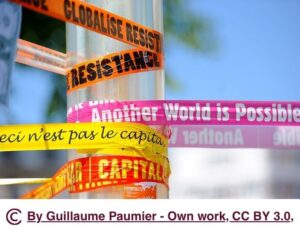
Through anti-WTO protests, resistance to international financial institutions, and the participatory spaces of the World Social Forum, SSE helped foster a culture of selforganization in economy, direct democracy within workplaces, and cross-border solidarity and alternative trade chains. It championed a people and local centered approach to neoliberal globalisation, challenging the dominance of multinational corporations and global markets that invaded our lives, cities, nature, imagination.
Today, the members of Ripess Europe, strongly believe that the context has shifted dramatically. Neoliberal globalisation, once seemingly unstoppable, now competes with rising nationalistic neoliberalism, protectionism, trade wars, and new forms of state and corporate power. Wars, weakened international institutions, and widespread insecurity have changed the landscape. Multinational corporations and global institutions still shape our world, but their influence now often operates through direct control of political institutions. ‘Peace’ is no longer a prerequisite for their prosperity; instead, they pursue spheres of influence as if we were once again in the 20th century.

A New Geopolitical Reality: From Market Hegemony to the Return of Power Politics
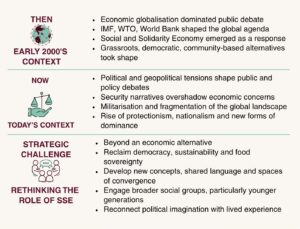
In the early 2000s, public debate revolved around economic globalisation, financial crises, and the dominance of international institutions like the IMF, WTO, and World Bank. Within this environment, the Social Solidarity Economy took shape as a response, a movement offering democratic, community-based, and sustainable alternatives to the failures of global capitalism.
Today, public and policy debates are increasingly shaped by political and geopolitical tensions, with power struggles, spheres of influence, and security narratives overshadowing purely economic concerns. State actors now operate within a militarised and fragmented global landscape, prioritising national interests and seeking new forms of dominance, reinforcing the heteropatriarchal capitalist system and authoritarian forms of power. This shift has fuelled protectionism, nationalist agendas, and a renewed reliance on force.
In this context, the transformative role of SSE should also evolve. As power is increasingly exercised through force, populism, and technological concentration, it is no longer sufficient for the Social Solidarity Economy to position itself primarily as an economic alternative. In the aftermath of the major sovereign debt crises in Southern Europe, many SSE networks have understandably focused on economic survival and organisational sustainability. However, this shift has often been accompanied by a relative weakening of political discourse and collective imagination, compared to the period of intensified mobilisation and politicisation between 2010 and 2015.
Within this environment, SSE and allied movements face a strategic challenge: how to speak about democracy, sustainability, and food sovereignty when political debate is framed primarily around national security and exclusionary notions of “sovereignty”? Responding to this challenge requires not only coordination across networks, but also the development of new concepts, shared language, and spaces of convergence, such as sectoral gatherings and collective processes, that can engage broader social groups, particularly younger generations, and reconnect political imagination with lived experience.
Repoliticising SSE: Building Collective Power and Autonomy
Europe among many issues faces a crisis of political representation as well. Many people feel disconnected from democratic institutions, unrepresented, and disillusioned with political processes that appear distant or controlled by elites. This creates a vacuum that historically allows authoritarian populism to flourish, eroding trust and undermining the legitimacy of the public sphere.
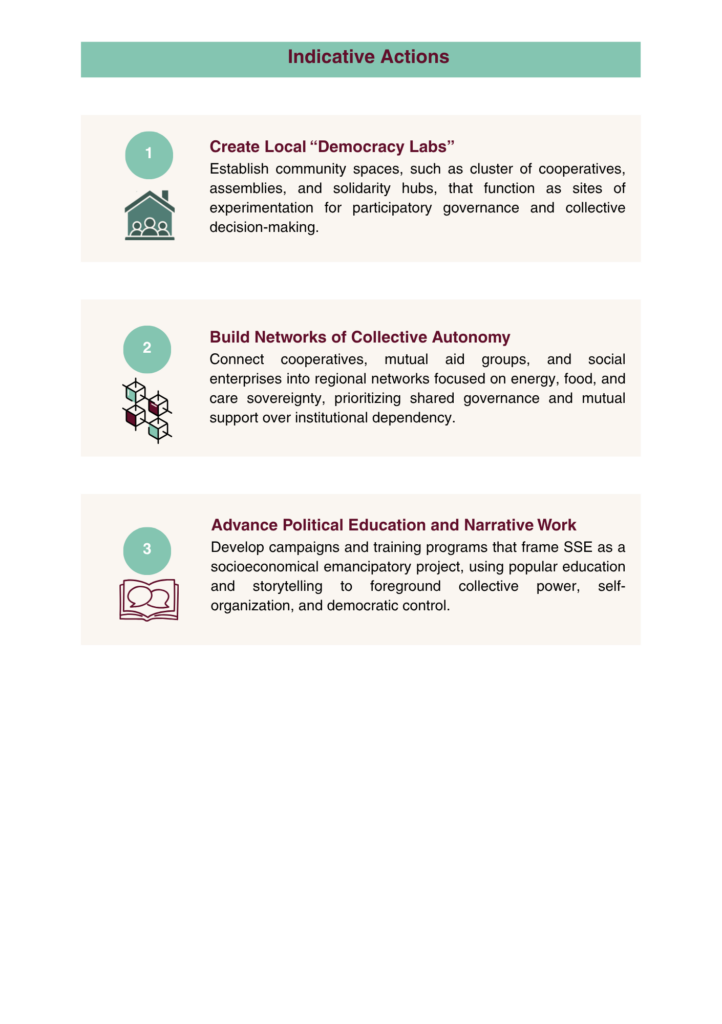
The Social Solidarity Economy could offer a practical response when it is rooted in democracy in everyday life, through self-managed structures, cooperative decisionmaking, and community assemblies. SSE demonstrates that meaningful participation is possible. These practices have the capacity to re-politicize daily life, keeping distance from conspiracy theories and show that democracy is not limited to electoral moments but is something that can be built and exercised collectively.
While state institutions may become increasingly technocratic, inaccessible or captured by the capital, local and regional spaces for participation remain crucial. Participatory budgeting, cooperative procurement, and citizen assemblies are concrete entry points where SSE can act as both partner and catalyst, helping to develop democratic capacities from the ground up rather than relying on top-down legitimacy.
For many people, especially younger generations facing precarious work, housing insecurity, and uncertain futures, SSE could offer more than policy support. It can create material pathways toward autonomy and collective survival. By building energy, food, and care cooperatives, communities reduce dependency on volatile markets and external authorities, while regaining control over essential infrastructures. These approaches shift away from grant-dependency and emergency responses, toward durable, collectively governed systems.
Grounding the Social Solidarity Economy: Human Rights and Universality
Social Solidarity Economy is rooted in the protection and expansion of life. Its practices emerge from concrete social needs and from the desire to organise economies around dignity, well-being, and collective responsibility. For this reason, human rights are not external to SSE as a human economy, but are embedded in its very purpose and everyday practices.
Across Europe, thousands of initiatives contribute to local development, strengthen social bonds, support local production, and build resilience in the face of economic, ecological, and social crises. These efforts respond to real and pressing needs: the erosion of public services, the concentration of economic power, the weakening of social protections, and the growing insecurity experienced by many communities. When rooted in solidarity and democratic participation, such practices expand people’s capacity to collectively shape the conditions of their lives. At the same time, the broader political environment in which SSE operates is marked by shrinking civic space, deepening inequalities, and increasing pressure on fundamental rights. Access to housing, healthcare, care, food, mobility, and dignified work is becoming more uneven, while borders harden and social divisions intensify. These dynamics remind us that economic alternatives cannot remain neutral regarding rights and belonging.
During this specific period, universality should be our political compass. The right to live with dignity, to participate in collective life, and to access essential goods and services cannot be conditional on nationality, legal status, gender, race, age, or origin. SSE practices gain their transformative meaning when they contribute to expanding rights rather than narrowing them, and when they strengthen inclusive forms of belonging. This perspective is particularly important when working with concepts such as local development, community resilience, food sovereignty, and autonomy. These approaches only remain emancipatory when they are explicitly connected to equality, openness, and social justice for all. Detached from a rights-based framework, they risk reproducing exclusions and hierarchies rather than overcoming them.
Human rights also offer a framework for understanding power and responsibility. The erosion of human and social rights is closely linked to austerity, precarious labour, authoritarianism and the concentration of wealth and decision-making power. In this context, SSE initiatives are able to create material infrastructures through which rights are enacted from below.
Building inclusive, plural economies means confronting inequalities and power relations within our own organisations and networks, including those linked to gender, race, class, migration status, and ability. Universality is a continuous collective practice that demands accountability, redistribution of power, and the centering of lived experiences.
By rooting local economies, commons, and collective infrastructures in a human rights perspective, the Social Solidarity Economy affirms a vision of society based on openness rather than exclusion, cooperation rather than competition, and liberty and solidarity rather than control. This orientation allows SSE to remain a space of democratic imagination and material transformation, capable of responding to fear and fragmentation without reproducing them.
In this sense, human rights are not an additional pillar of SSE strategy, but the ground on which all other priorities stand: care, ecological transition, food sovereignty, democratic participation, and collective autonomy. They provide the horizon that ensures these practices remain emancipatory and universal.
Internationalism of Peoples: Learning, Resistance, and Creation Beyond States
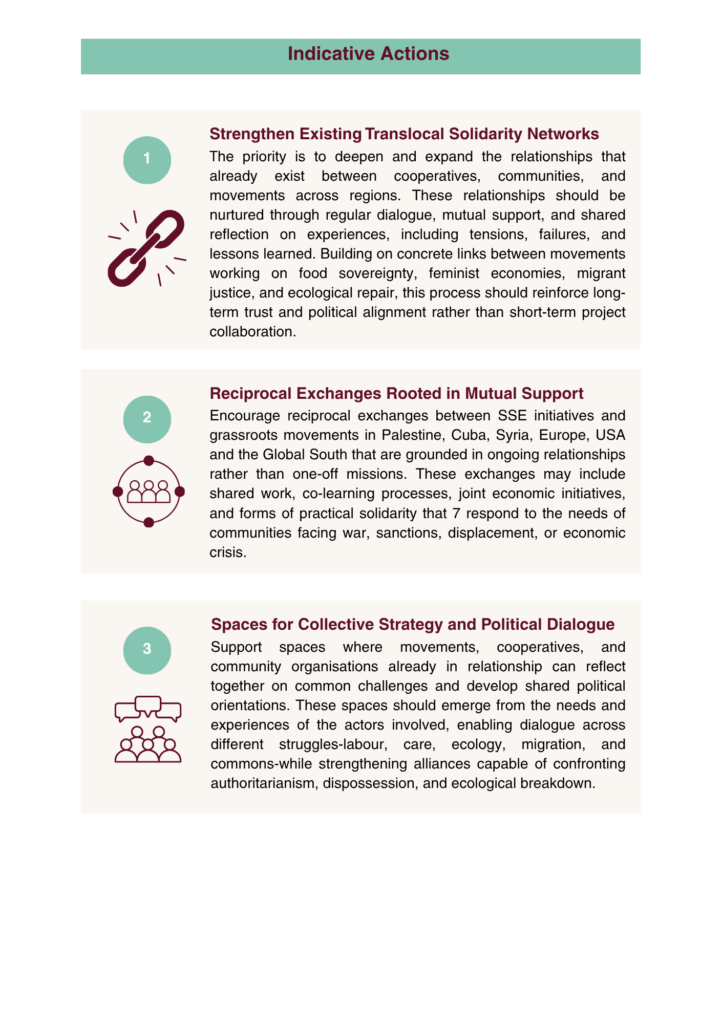
Building on the above, our movement has historically drawn its strength from international cooperation. Today, this tradition should be renewed, not only through institutional diplomacy or formal agreements, but mainly through direct, horizontal relationships between communities, cooperatives, and social movements.
This new internationalism is not only about supporting struggles elsewhere, but about learning from them. It requires acknowledging asymmetries of power, resources, mobility, and visibility between actors-especially between Europe and regions affected by war, occupation, sanctions, or elected authoritarianism.
Without negating the centrality of labour struggles, this internationalism goes beyond a single defining identity and embraces the multiple, intersecting realities through which people experience dispossession. It connects those affected by borders, markets, patriarchy, colonial legacies, ecological destruction, and authoritarian governance, around a shared pursuit of autonomy, dignity, care, democratic control over the conditions of life, and a commons-based vision of society. Within this framework, cooperation between movements and cooperatives in Palestine, Cuba, Syria, Europe, and the Global South, USA becomes a space of mutual political learning. Exchanges of products, practices, and knowledge are not acts of charity, but moments of co-creation that strengthen collective capacities for survival, resistance, and imagination beyond state and market logics.
This people-centered internationalism challenges the geopolitical polarization of global superpowers by building translocal communities grounded in care, ecological responsibility, and shared democratic practices.
Reclaiming Collective Culture: Solidarity as a Response to Fear and Fragmentation
One of the deepest challenges of our time is not only economic or political, but cultural. Neoliberal capitalism has systematically dismantled shared spaces, weakened collective identities, and replaced social bonds with competition and individual responsibility. At the same time, states increasingly instrumentalize culture through nationalist narratives, seeking to homogenize society by promoting fear-based forms of belonging defined by exclusion.
This creates a cultural vacuum. Into this void step authoritarian and nationalist projects that promise protection, identity, and meaning-while stripping solidarity of its emancipatory content. Values such as care, mutual aid, cooperation, and community, once rooted in everyday collective life, have been either commodified or distorted into tools of control.
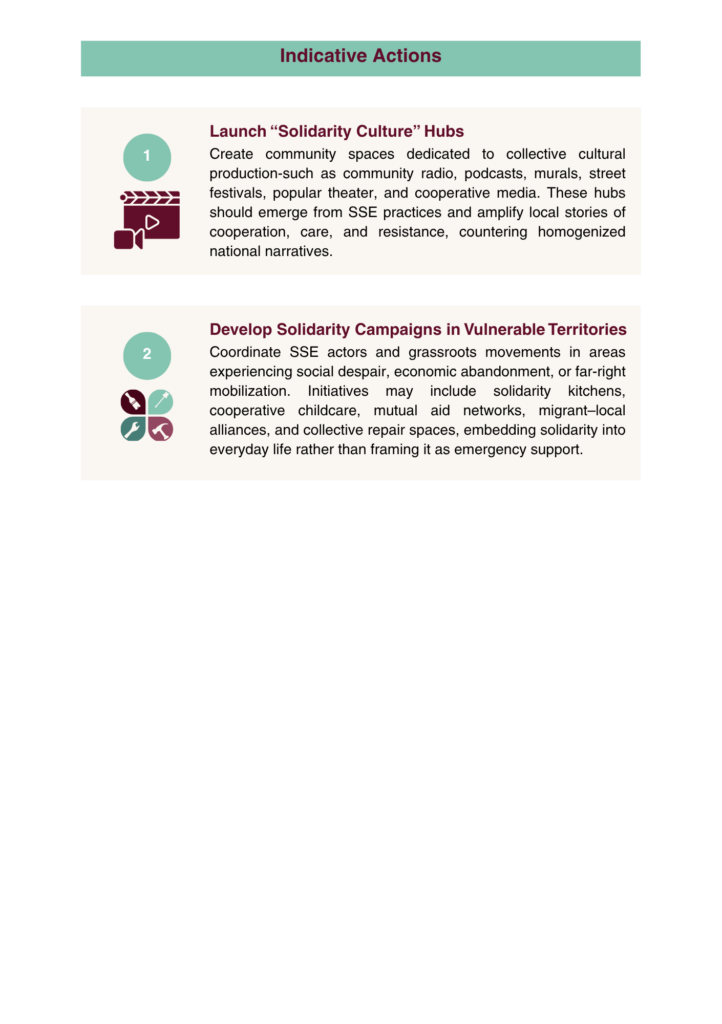
The Social Solidarity Economy offers a different cultural horizon where collective culture is not proclaimed but produced. SSE innovation ecosystems generate shared meanings, habits, and values through lived experience: working together, deciding together, and caring together. Culture here is not a heritage to be protected nor a narrative imposed from above, but a collective capacity that emerges from common practice.
Reclaiming collective culture therefore means reclaiming values that capitalism has appropriated and emptied of substance, solidarity, dignity, reciprocity, care, and reembedding them in material practices. This process directly challenges both neoliberal fragmentation and nationalist homogenization, offering forms of belonging that are plural, open, and rooted in cooperation and freedom rather than exclusion.
For SSE to play this role, it must move beyond serving only the already convinced. It must become a source of protection, dignity, and collective power for those most exposed to insecurity, isolation, and fear, including people living in territories marked by unemployment, social abandonment, and the growing influence of the far right. Solidarity, in this sense, is not simply a value; it is a shared infrastructure of survival and empowerment.
But this also means recognising that the question of class cannot be addressed only through narratives. It is embedded in the structures of our initiatives: in who decides, how work is organised, and how value is distributed. If SSE is to remain credible as a transformative project, it must strengthen democratic governance, fair conditions of work, and real worker and community control.
By rooting itself in the everyday realities of working people and socially & culturally marginalised communities, SSE can become more than an alternative economy. It can be a space where communities organise collective responses to insecurity and exclusion, while building alliances capable of opening pathways for broader social transformation.
Feminist Political Economy and the Social Reproduction of Life
Care work forms the foundation of everyday life and community well-being. As public services are dismantled and the burden of survival is increasingly shifted onto households, care has become a central terrain of political struggle. The commodification and invisibility of care work, particularly as it affects women, migrants, racialised communities, and informal workers, are not unintended side effects, but systemic outcomes of an economic model that externalises the costs of social reproduction.
Care should be recognised as a universal, multidimensional, and collective right, as well as an intergenerational practice that sustains life across time. It connects generations, communities, and social groups, and carries ethical, relational, and philosophical dimensions that extend beyond economic valuation. Moving towards a just and sustainable society requires a social organisation of care grounded in shared responsibility. Ensuring this right depends on redistributing care responsibilities across the whole of society, including public institutions, community networks, and households.
A central political objective of a feminist approach is the defeminisation of care. While women, migrants, and racialised workers are rightly centred due to their disproportionate exposure to exploitation, reorganising care collectively must also mean breaking its historical and structural association with women. Feminist political 9 economy challenges the patriarchal division of labour and calls for the active redistribution of care across genders, generations, and institutions.
SSE directly confronts these realities by organising care collectively and democratically. Through care cooperatives or non-typical schemes, community-based services, mutual aid centres, community kitchens, and collective health initiatives, SSE demonstrates that care can exist beyond both market exploitation and authoritarian state control. These initiatives function as essential infrastructures of resistance and autonomy, transforming dependency into interdependence and vulnerability into shared responsibility.
Building such structures requires the development of collective initiatives explicitly aimed at improving the working conditions of care workers and strengthening the less privileged communities. Meaningful collaboration with women and migrant workers in the care sector is essential to ensure that care systems respond to lived realities and redistribute power within the sector. At the same time, SSE initiatives can contribute to cultural and structural change by promoting shared responsibility, encouraging the participation of men and all genders in care work, and challenging the economic, organisational, and cultural norms that reproduce gendered divisions of labour – both within households and within collective care arrangements.
Finally, from a feminist political economy perspective, issues of work–life balance must also be reframed. The reconciliation of work and life should be understood as a question of collective responsibility, linked to decent work, reduced working time, the redistribution of care duties, and the right to time for life, community, and democratic participation.
A sustainable care economy further depends on broader structural conditions, including tax justice and redistribution. In this sense, care emerges as a commons, grounded in dignity, proximity, feminist economics, and democratic governance, and as a central pillar of any transformative social and economic project.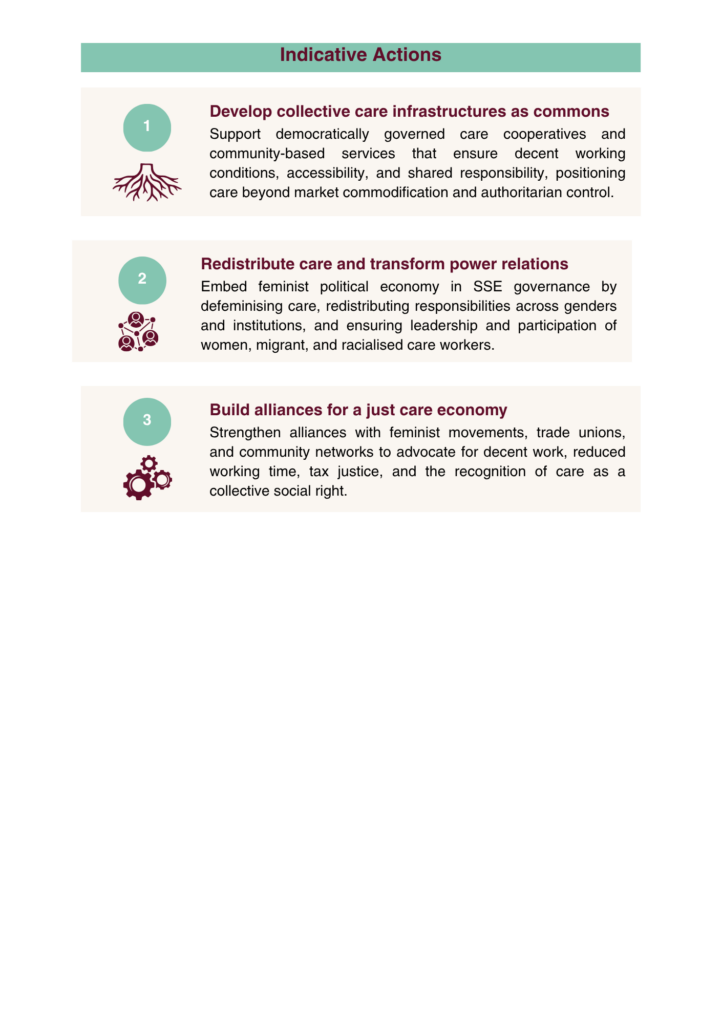
Environmental Justice and the Ecological Role of SSE
The climate crisis is no longer a distant risk. Its effects of wildfires, droughts, energy poverty, food insecurity, and ecosystem collapse, are felt daily, with the greatest impact on those already socially marginalized. While European institutions often frame the ecological transition in terms of “green growth” and private sector incentives, the underlying extractive logic remains unchanged.
These impacts also reveal critical gaps in preparedness and collective response. Communities face increasing exposure to disasters, fires, floods, heatwaves, while public capacity for prevention, response, and recovery remains limited or unevenly distributed, leaving the most vulnerable to absorb the consequences.
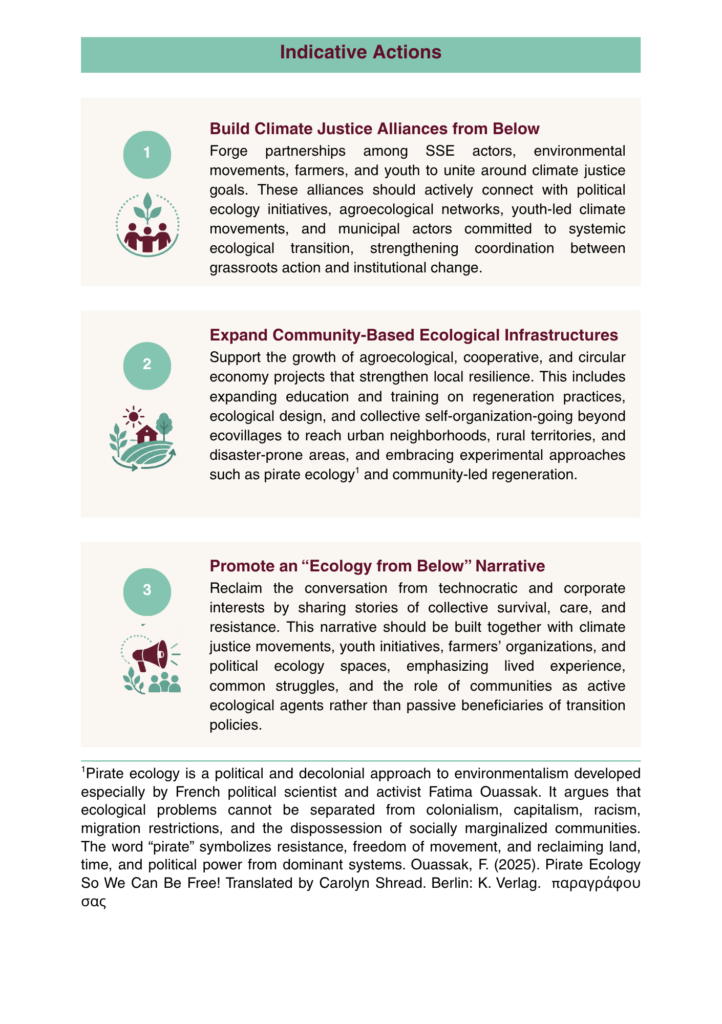
SSE recognizes that the roots of the climate crisis are the same as those undermining democracy, equality, and solidarity. Advancing environmental justice means advancing social justice at the same time. Community-rooted SSE practices-such as agroecology, circular economy projects, energy cooperatives, and repair networks-prove that real transition is possible when grounded in shared ownership and democratic governance.
These practices are especially critical in the food system, where farmers face increasing precarity, a declining income, and growing dependency on volatile markets. Strengthening food sovereignty through agroecology and cooperative structures is essential to ensure both ecological sustainability and dignified livelihoods for those who produce food.
SSE must resist being used as a tool for competitive green capitalism. Instead, it should speak out as a transformative force for climate justice, reminding us that overcoming the climate crisis will require collective imagination and systemic change, and is not to be left to financialisation and market solutions
As a global network, RIPESS has a key role to play in extending these approaches beyond national and European boundaries-building collaborations with movements, communities, and territories across regions affected by ecological collapse, extractivism, and climate injustice
Institutional Autonomy and Sustainability: The Future of SSE
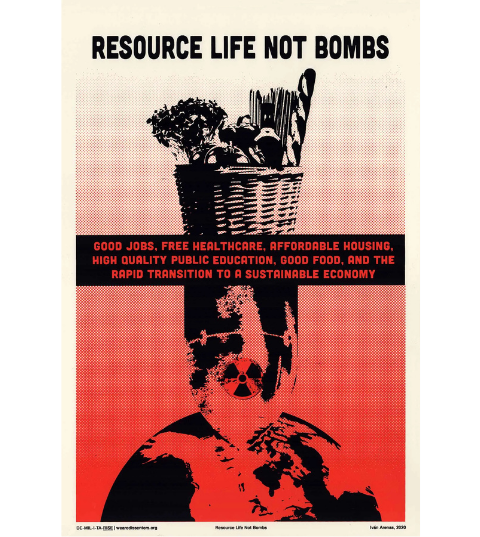
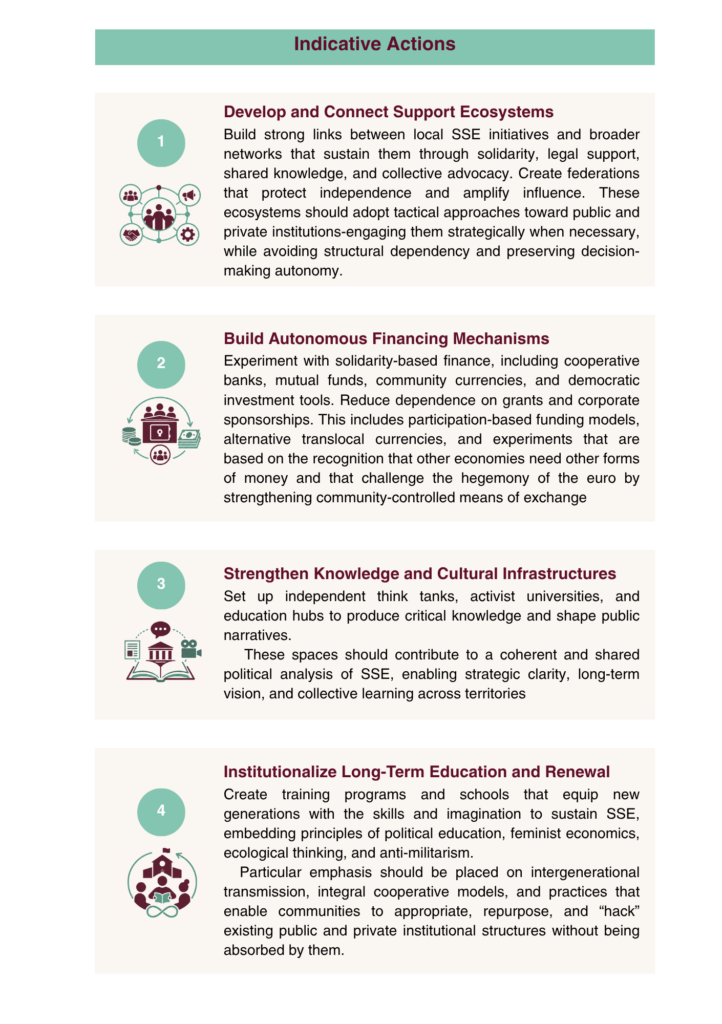
For the Social Solidarity Economy to remain resilient, it needs strong support structures that preserve its autonomy. Relying too much on state funding or adapting to market pressures can weaken SSE’s transformative mission. Especially now, as Europe shifts resources toward militarization and security, community-led initiatives risk losing access to support and public attention.
In this context, institutional autonomy is inseparable from economic scale and collective power. Without increasing the economic volume and circulation capacity of SSE, autonomy risks remaining symbolic rather than material.
SSE must protect its independence as an act of civil resistance. By safeguarding the infrastructures of peace, care, and cooperation, it can maintain space for solidarity and democratic action, even as public priorities change.
This also requires a strong and independent theoretical framework-one that articulates SSE as a sociopolitical project in its own right, rather than as a complementary sector or policy instrument within dominant economic systems.
Defending Freedom of Movement and Belonging: SSE Against Anti-Migration Politics
The rise of anti-migrant rhetoric and exclusionary policies has become a defining feature of the current political climate in Europe. Migrants, refugees, and racialized minorities are often blamed for crises they didn’t cause, facing borders, detention, and eroded rights.
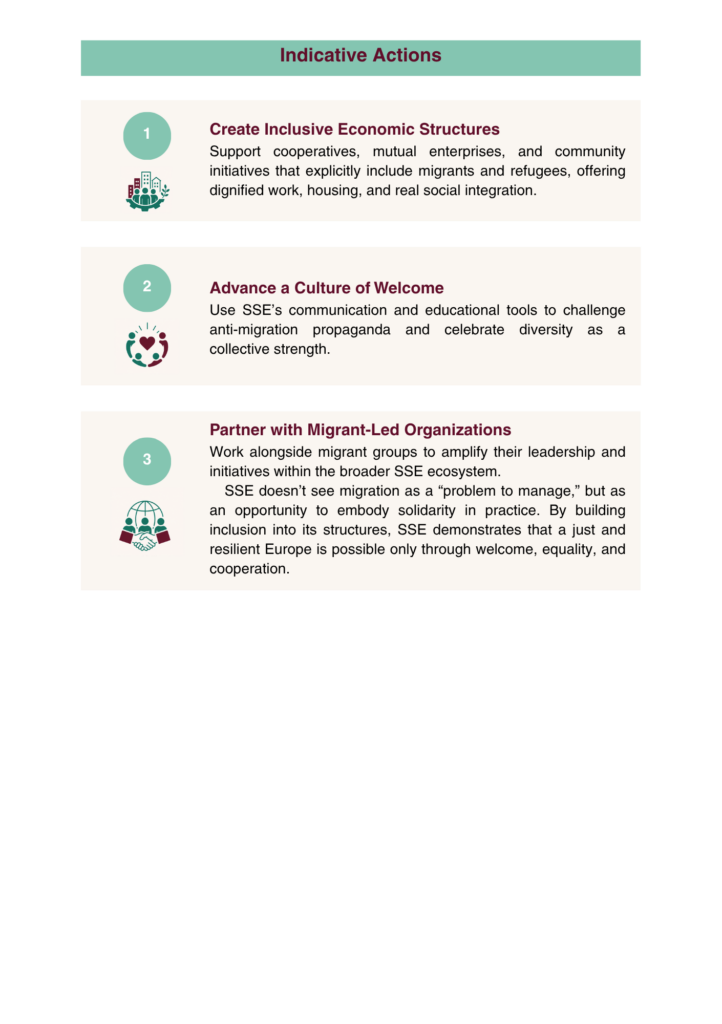
Beyond service provision and economic inclusion, the Social and Solidarity Economy has a crucial role in challenging the dominant narratives that frame migrants and refugees as outsiders, threats, or temporary guests. The fact that even people who have long been considered ‘integrated’, who have lived and worked in their communities for years, can suddenly find their rights, safety, and sense of belonging called into question reveals a broader escalation of authoritarianism. Our position is not that rights should depend on work, economic contribution, or social acceptance, but that freedom of movement, safety, and belonging must be defended for all.
Systemic media discourses and political rhetoric increasingly portray migration through the lenses of invasion, security, and scarcity, obscuring the structural causes of displacement and legitimising exclusionary policies.
SSE initiatives can actively contribute to transforming this narrative by making visible everyday practices of cooperation, care, and shared life. By recognising migrants not as beneficiaries, invadors or victims, but as co-creators, workers, and decision-makers, SSE affirms belonging as a social and political condition rather than a legal or ethnic status. In doing so, the SSE helps reframe migration as a lived reality of interdependence, contribution, and commoning – countering fear-based narratives with practices of solidarity, dignity, and collective responsibility.
SSE has a vital role to play in countering these trends. Its practices and principles challenge exclusion by creating spaces where everyone-regardless of origin or status -can participate, work, and belong. Across Europe, real-world examples abound: women-led care cooperatives providing jobs and services, migrant-run community kitchens, solidarity clinics, and housing co-ops that protect families from market exploitation.
Governing at the Roots of Change: The Role of SSE
Social Solidarity Economy (SSE) offers practical ways to design and implement social policies that are democratic, participatory, and rooted in lived experience. In contexts where public institutions may appear distant, bureaucratic, or disconnected from everyday realities, SSE initiatives can help reconnect policy-making with community needs through co-governance practices, collective ownership, and accountability from below. Rather than positioning SSE primarily as an implementing partner of public policy, its role can also be understood as a space for experimentation and social innovation, and as a space to deepen democratic and participatory processes where communities develop solutions, services, and forms of solidarity that respond directly to local needs, while allowing the most unheard voices to be heard. In doing so, SSE actors create alternative pathways for social protection, emancipation, care, and economic participation that can inspire broader institutional changes.
Where conditions allow, constructive bridges with public authorities can emerge. Access to supportive public frameworks, such as dedicated financing instruments, cooperative and social procurement mechanisms, or the shared use of public infrastructures and spaces, can strengthen these initiatives and expand their impact. Such collaborations are most meaningful when they respect the autonomy of community actors and enable mutual learning rather than reproducing hierarchical relationships.
In this sense, SSE can contribute to reshaping social policy by enabling communities to co-design services, organise collective responses to social challenges, and open new channels of dialogue between citizens and institutions. Experiences such as cooperative procurement, community-run services, and locally anchored partnerships illustrate that public policy can evolve through shared responsibility and negotiated cooperation, rather than through purely top-down governance.
This perspective does not imply withdrawal from public institutions, nor unconditional alignment with them. Instead, it recognises SSE as a field capable of generating practices, alliances, and pressures that may gradually transform governance itself. When opportunities arise – through progressive local governments, participatory processes, or policy windows – collaboration can become a pathway for advancing more democratic, redistributive, and socially grounded forms of public policy.
SSE Sectors: Where Transformation Happens
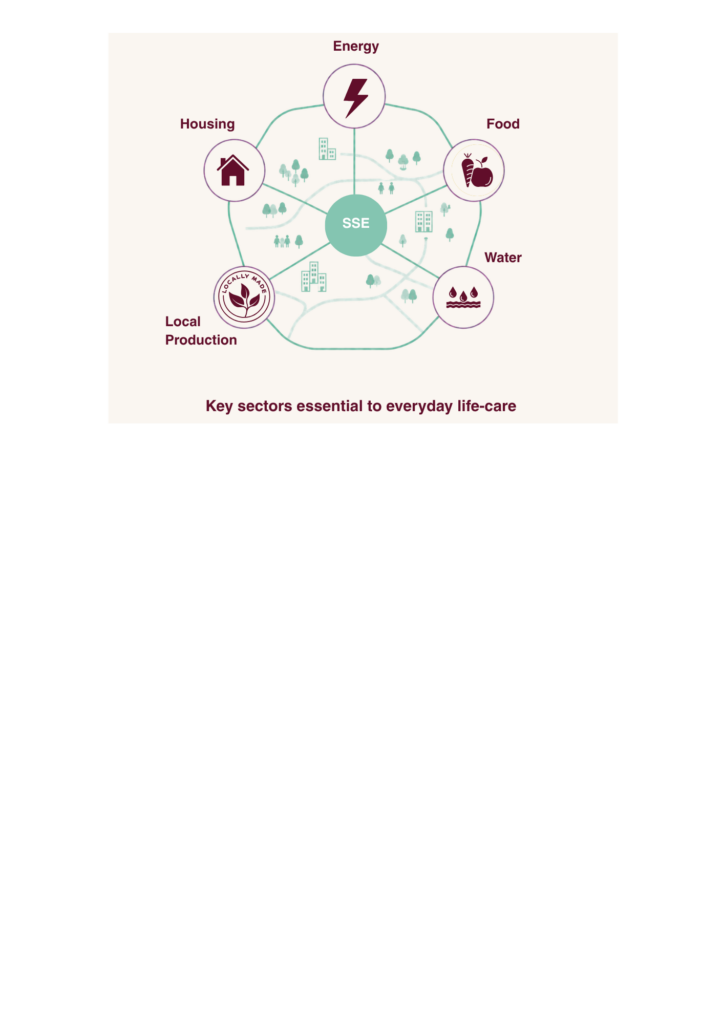
The Social and Solidarity Economy becomes truly transformative when it focuses on key sectors essential to everyday life-care, food, housing, energy, water, and local production. These areas are not just economic fields; they’re where power is exercised, inequalities are reinforced, and the distribution of wealth is determined.
When SSE intervenes in these sectors through cooperatives, commons-based services, solidarity markets, and community infrastructure, it challenges exploitative systems at their roots. This work shifts provision away from profit-driven models and toward collective ownership, fair redistribution, and just taxation that sustains public and common goods. It also helps break down gendered divisions of labor, supports dignified work, and makes the economy a tool for social justice.
Anchoring SSE in these sectors means supporting local production and community control over resources. This reduces ecological damage and reliance on exploitative global supply chains, and it builds economies organized around care, equality, and democratic responsibility. These practices aren’t just technical solutions-they are political acts that strengthen sustainability, community sovereignty, and collective wellbeing.
Reclaiming the Commons and Moving Beyond Growth
The urgent crises facing us today-ecological, social, and democratic-cannot be solved by an economic model that focuses on endless growth, accumulation, and extraction. Even with new labels like “green growth”, the mainstream approach still puts profit and expansion first.
SSE points toward a different future. Instead of growth for its own sake, it emphasizes economies built around well-being, care, and ecological limits. This aligns with postgrowth and sufficiency movements, especially in the Global North, which call for reducing harmful production and consumption and focusing on redistribution, care, and democratic control.
At the same time, SSE helps revive the commons as a modern project-organizing resources like land, water, housing, care, and digital infrastructure through collective governance and shared responsibility. Reclaiming the commons is a forward-looking strategy for resisting both market exploitation and rigid state control. In times of ecological crisis and authoritarian drift, commons-based approaches empower communities to manage essential resources, strengthening democracy and resilience.
By advancing a commons-based, post-growth vision, SSE expands what’s possible in Europe today. It shows that well-being depends on care, localization, and collective stewardship-not endless expansion. This approach connects feminist economics, environmental justice, food sovereignty, care, and democracy as interlinked parts of a shared transformation.

Communication and Narrative: Building a New Cultural Imagination
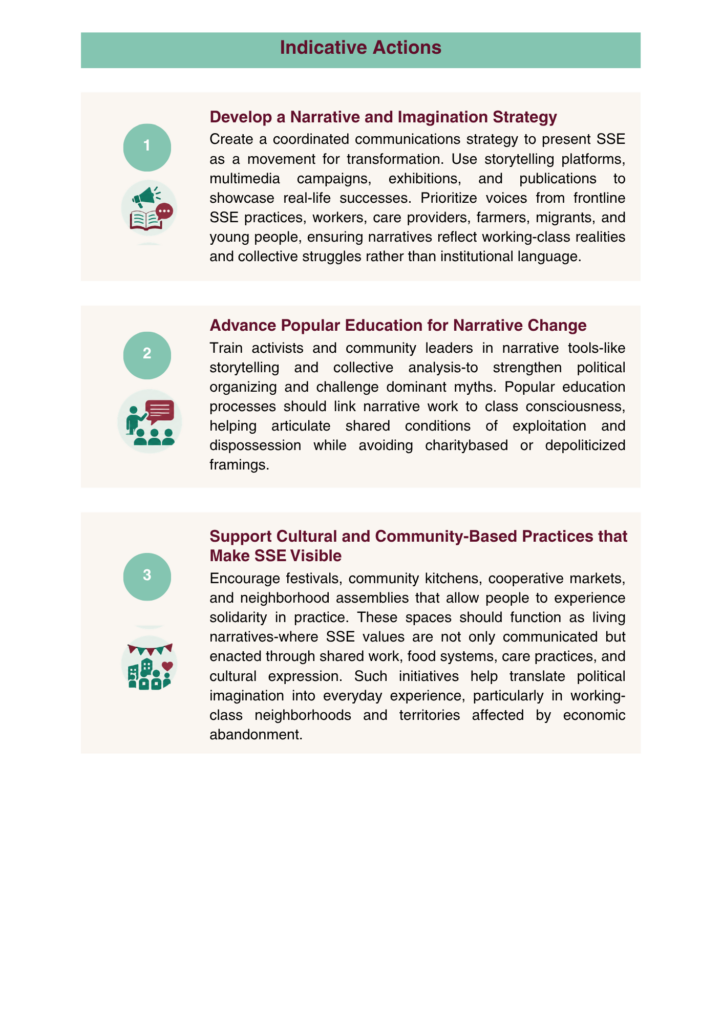
SSE must tell stories that make solidarity tangible and visible-sharing clear examples that counter fear and populist rhetoric. Redefining “development” as social well-being and equality, rather than just economic growth, is crucial. But communication goes further: it’s about challenging the “common sense” of neoliberalism, which treats markets as natural and care as a private responsibility.
At the same time, SSE must confront a key risk: it is still often perceived as a middleclass project (at least in Europe), disconnected from workers, low-paid jobs, and everyday working-class realities. Strengthening the movement requires explicitly naming and addressing this gap-not by speaking about poverty from above, but by grounding narratives and practices in working-class experiences and struggles that many SSE actors themselves are affected by.
By sharing alternative ways of thinking and organizing, SSE makes it clear that other worlds are already being built-through community food systems, feminist care projects, migrant-led cooperatives, and ecological commons. These are not marginal experiments; they are living proof that solidarity and collective responsibility work in practice.
These stories must be built from lived practice. Rather than abstract or overly intellectual discourse, narrative work should start from real experiences, contradictions, and limits-acknowledging that SSE actors are not always consistent in practice, while holding true to a shared ethical horizon of coherence and transformation.
Embedding these narratives in public culture helps SSE reclaim imagination as a space for hope and change.
This process should be collective and relational: stories co-created arm by arm with practitioners, workers, community members, youth, and artists, rather than spoken on their behalf. Youth cultural associations, grassroots artists, and community media can play a key role in translating SSE values into accessible, emotional, and politically grounded cultural expressions.
Strategic Alliances: Building a New Social Bloc
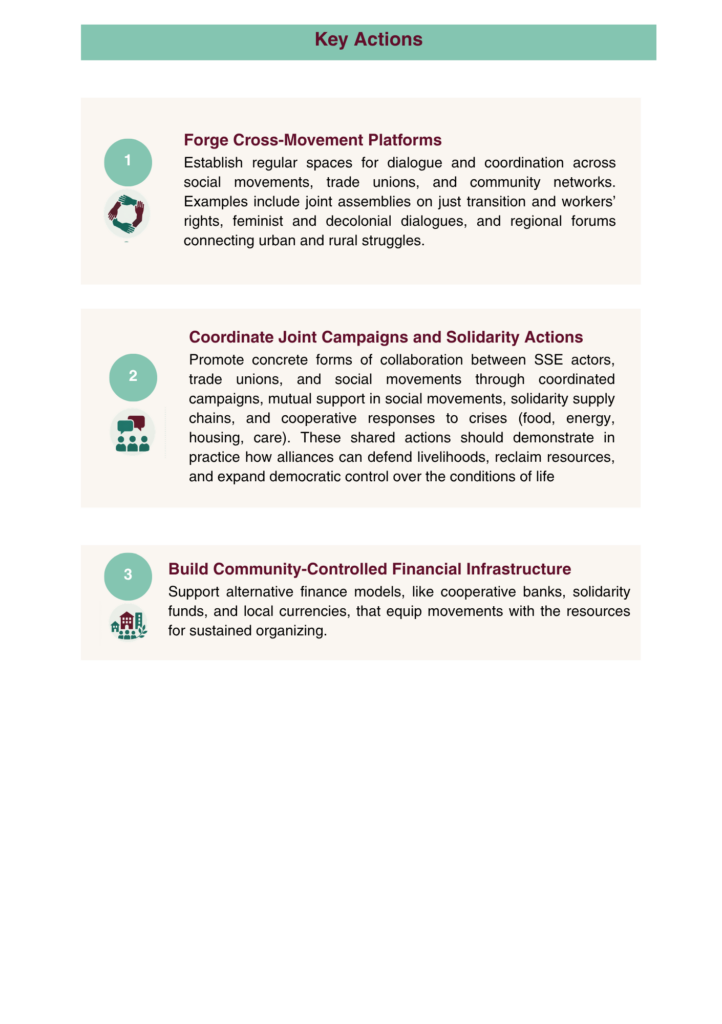
The Social Solidarity Economy cannot create systemic change alone. Real transformation depends on building strong alliances across different movements- climate justice, feminism, commons, labor rights, food sovereignty, democracy, and decolonization. The challenge is to move beyond short-term cooperation and instead weave lasting relationships that can confront authoritarianism, neoliberalism, and ecological breakdown together.
This means engaging in dialogue and joint action both inside and outside institutions, and working toward unified platforms for collective struggle. Within these alliances, it’s also vital to nurture our own movements by building accountability and care, addressing internal oppressions like patriarchy and racism, and making space for all identities and experiences.
Resourcing these convergences requires new strategies-like community-controlled finance models, cooperative banks, Indigenous funds, and solidarity currencies- that provide the legal, technical, and financial support needed for autonomy. Alliances should also reach beyond traditional boundaries, especially by strengthening ties with workers’ movements and trade unions. Connecting SSE and labor movements is essential for tackling inequality, labor rights, and rural–urban solidarity, and for anchoring SSE within a broader bloc for systemic change.
Download the Strategy paper
May 2026
RIPESS Europe | Strategic Framework 2026
Created and published by the RIPESS EUROPE Strategy Circle
Edited and Coordinated by Georgia Bekridaki, Dock | Social Solidarity Economy Zone (Greece), Ripess Coordination Committee
Graphic Design by Sofia Melissourgou, Dock | Social Solidarity Economy Zone