
Author: RIPESS Europe
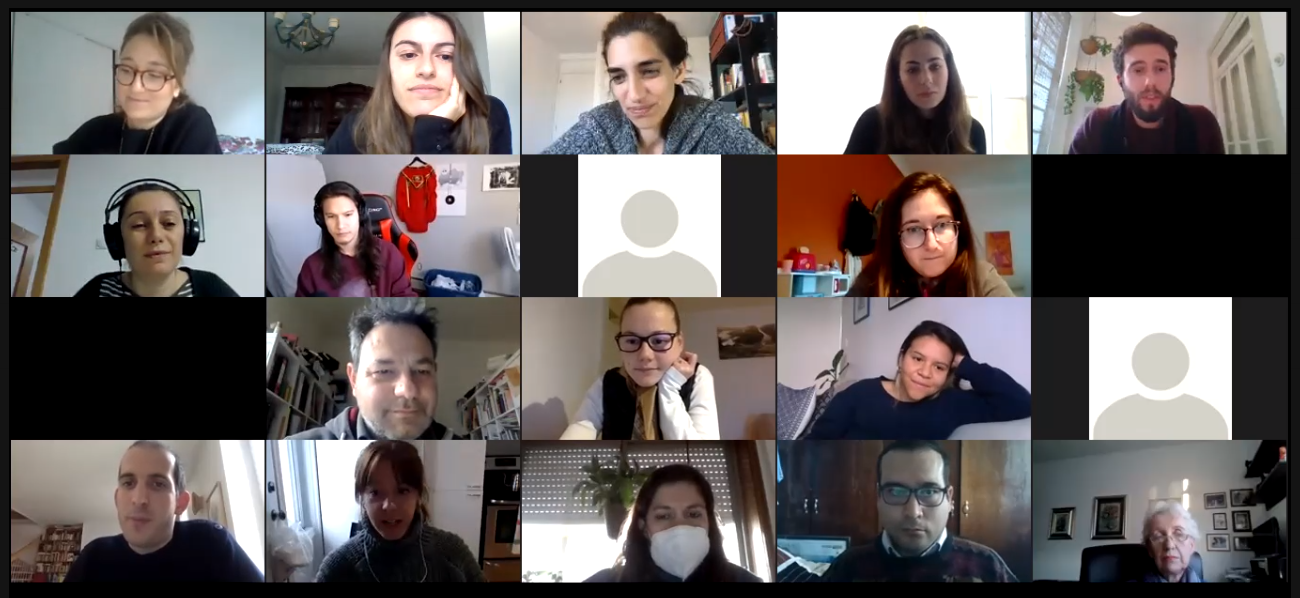
The RIPESS Europe General Assembly 2025, held in Bordeaux on 1–2 November, came at a time when many Social and Solidarity Economy (SSE) initiatives are feeling the pressure of creating a strategy that could tackle the current challenges. Across Europe, projects are multiplying on the ground, but funding is tighter, public spaces are shrinking, and a lot of “social” and “green” talk is being absorbed by business-as-usual models. Facing these issues, the Assembly was a moment to pause, and get clearer about what RIPESS Europe is here to do and how, in order keep its transformative identity and the elements that make the Network effective for the SSE visibility and useful for its members.
A shared understanding quickly emerged: RIPESS Europe needs to act both as a network for sharing experiences, but also it needs to act as an actor, so that its work actually makes sense and has impact in different national contexts. Its role is to help connect people, strengthen collective action, and give SSE a clearer voice at European and international levels. This led to an important conclusion: while SSE practices are growing everywhere, they stay fragile when they remain isolated. Without shared stories, coordination, and longer-term strategy, many initiatives struggle to last or influence bigger decisions. That is why the Assembly stressed the need for a clear SSE strategy, one that presents solidarity economy not just as a set of local projects, but as a way of organising economic life around cooperation, care, and people’s control.
One of the main decisions in Bordeaux was to confirm RIPESS Europe’s new sociocratic governance model. In practical terms, this means organising the network through four main circles — Ecosystems, Recognition, Movement Building, and SSE Foundations — supported by functional circles for governance, finances, communication, and strategy. The goal is simple: share responsibility more evenly, make decision-making clearer, and avoid overloading a few people. Participants also proposed appointing a care person in each circle to help deal with tensions early and keep collaboration healthy.
The SSE Foundations circle reported strong progress on two key tools. The first is a set of guidelines for non-extractive research, which push back against research practices that take knowledge from communities without giving much back. These guidelines have already been presented publicly and received positive feedback. The second is a renewed RIPESS Europe Charter of Principles, with a shared vocabulary, while highlighting ideas like commons, agroecology, digital and energy commons, and care. Members agreed the Charter should stay readable and be backed up with concrete examples from practice.
Discussions on Strategy were among the most dynamic of the Assembly. Participants agreed that SSE should not be framed only as an alternative way of doing business, but as a space where people learn, organise, and regain control over parts of their lives. There was clear caution against getting pulled into “green capitalism” narratives. Instead, members highlighted issues like tax justice, finance, gender equality, intergenerational dialogue, peace, and trust as areas where SSE can offer real alternatives. Finally all members agreed that we should strengthening financial autonomy and international solidarity, including partnerships beyond Europe, was identified as essential for the long-term independence and impact of the network.
When it came to alliances, the Assembly took a realistic and selective approach. The Nyéléni process was highlighted as a key space where RIPESS Intercontinental is contributing to broader conversations on systemic change, alongside food sovereignty, climate justice, and feminist movements. Members noted that the Kandy Declaration is already out, and that the upcoming Common Political Action Agenda (CPAA) will offer concrete directions for joint work. At the same time, the relationship with the Global Social Economy Forum (GSEF) was openly discussed as challenging. Participants pointed to problems around inclusion, recognition, and the sidelining of youth voices, and agreed that expectations and engagement need to be reassessed. At European level, ECOLISE and GEN Europe were confirmed as important partners, especially around food policy, housing, youth engagement, and community-led initiatives. Cooperation with Social Economy Europe was welcomed cautiously, with awareness that current EU-level policy frameworks remain fragile.
The Intercooperation Space identified concrete areas for joint work in the coming period: food sovereignty, local and complementary currencies, community resilience, and communication and education. Financial independence also came up repeatedly, with calls to reduce reliance on short-term project funding and explore shared financial tools.
The Assembly welcomed two new members — La Main Foncière Coop (France) and Verbund Kooperatives Wirtschaften – Social Solidarity Economy Germany — and confirmed Ruby van der Wekken and Dražen Šimleša as RIPESS Europe’s representatives to RIPESS Intercontinental.
Overall, the Bordeaux GA was about getting clearer, more connected, and more intentional, in order to renew the meaning and relevance of our actions in today’s context of multiple, overlapping crises.