Author: RIPESS Europe
The Kandy Declaration emerges from a moment of profound global rupture. It is a political and action-oriented declaration shaped by peoples and movements confronting the sharp edge of multiple, interconnected crises. Acclaimed at the 3rd Nyéléni Global Forum in September 2025 in Sri Lanka, the Declaration responds directly to the realities of escalating wars and genocides, deepening debt and austerity, corporate capture of food and health systems, climate collapse, and the intensification of patriarchal, racist, casteist, and authoritarian violence across the world.
As Dražen, Coordinator of RIPESS Europe, underlines, “The Kandy Declaration is a political and action-oriented statement from the 3rd Nyéléni Global Forum. It is the result of deep democratic consultation with regions and global movements in several rounds, acclaimed by the Forum, translated into 18 languages, and publicly presented for the first time at the People’s Summit in Belém during COP30.” This process matters. The Declaration carries the legitimacy of movements who organised, debated, and decided collectively , not as an institutional exercise, but as a tool for struggle.
The Kandy Declaration names its adversaries clearly. It confronts capitalism and imperialism as systems driving land and water grabbing, extractivist mining, industrial monocultures, industrial aquaculture, toxic agrochemicals, digital and genetic enclosure, and the financialisation of life itself. It exposes how debt regimes imposed by international financial institutions are stripping communities of access to food, healthcare, education, housing, and public services, while forcing governments into privatization and austerity. It rejects controversial solutions promoted under green and blue economy narratives that at the end of the day, reproduce extraction under the buzz word of sustainability.
The Declaration also takes an unequivocal stand against war, occupation, and genocide, affirming internationalist solidarity with peoples facing violence — including Palestine — and committing to oppose the use of hunger, debt, and the destruction of health systems as weapons of war. It links militarism, corporate power, and climate breakdown as parts of the same system of domination.
Crucially, the Kandy Declaration calls for the convergence of global movements’ struggles — for peoples’ rights and peace; food sovereignty and agroecology; health for all; climate and energy justice; feminist, care-centered and solidarity economies; defense of the commons; and the transformation of global governance. It commits to concrete collective actions: mobilizations against imperialism and fascism, resistance to corporate monopolies over seeds, land and knowledge, support for binding rules on transnational corporations, and the building of people-led alternatives from below.
In this sense, the Kandy Declaration is a shared political mandate — a tool to align struggles across territories and movements, and to turn convergence into coordinated action. As Dražen notes, it is a call “for convergence of global movements’ struggles for peoples’ rights and peace, sustainability and climate justice, feminist and solidarity economy, health for all and commons.” The task now is clear: to take this Declaration into our territories, campaigns, and alliances, and make it live through collective action.
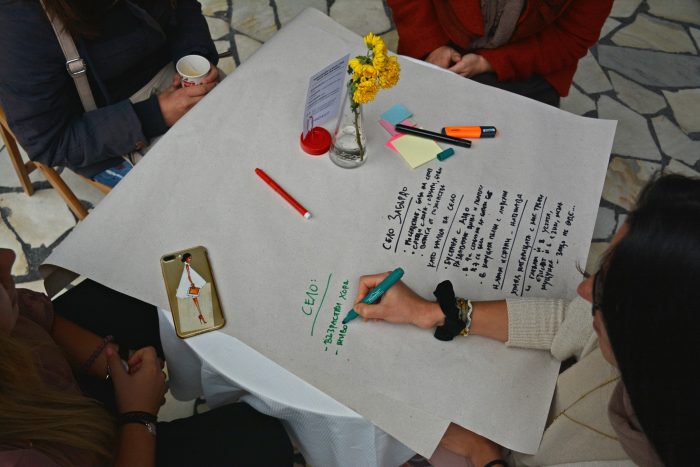
During the working process at the Forum, the Declaration translated in 18 languages to ensure that every voice could be heard and every word shared in equality.