Author: RIPESS Europe
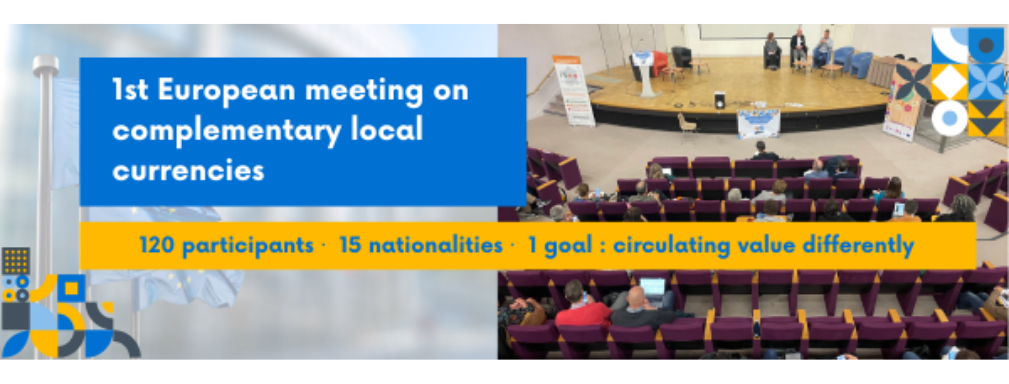
The First European Meeting of Local Currencies – Bordeaux, 27–28 October 2025
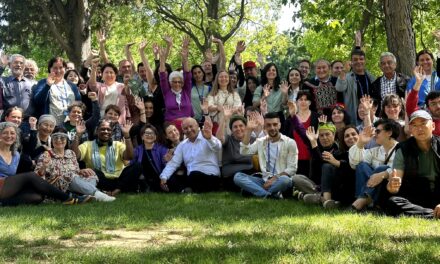
The first European Meeting of Local Currencies (REML 2025) in Bordeaux marked a milestone for Mouvement Sol and the broader movement of citizen-led monetary initiatives. Co-organized with the RTES, the City of Bordeaux, and La Gemme—the local currency of Gironde—the event gathered more than 120 participants from 15 countries, uniting local currencies, social economy actors, researchers, and local authorities around a shared vision: making money a democratic, ecological, and social tool for territorial transition.
Over two intensive days, participants explored the diversity and vitality of local currency initiatives across Europe—from the Chiemgauer in Germany with its Climate Bonus, to Italy’s Sardex, which now connects 3,500 businesses through €70 million in annual transactions. The Eusko in the Basque Country, and even Brazil’s Mumbuça, which supports microcredit in working-class neighborhoods, offered vivid examples of how alternative currencies strengthen real economies and local ties.
RIPESS Europe co-organised several meetings, which strongly linked the creation of local currencies to working towards a sustainable future and, as such, also drew on the solidarity economy movement in Europe. Various members of the European network intevened: Jason Nardi (RIES and RIPESS) spoke at a workshop on promoting and building European connections with SSE ecosystems and territories, while Ruby van der Wekken (Commons.fi Finland) stressed that ‘another economy needs another kind of money’ and shared the experiences of the Helsinki Timebank community currency, emphasing also the importance of developing complementary currency charters that explicitly link them to the construction of the solidarity economy. Berenice Dondoyne (MES France) facilitated a working group on the economic model of local and city currencies, and Annemie Hendrickx (Secretary of Economia Solidale Trentina, Italy) spoke about the European cross-border cooperation project they are promoting. Finally, Gabriella Gimigliano (RAMICS / University of Siena) facilitated a meeting on advocacy and complementary currencies.
The meeting underscored a collective ambition: to deepen European cooperation, share knowledge, and build a common advocacy platform. Workshops delved into practical challenges such as sustainable economic models, digitalization, national networks, and the role of local currencies in ecological and social transitions. As Patrick Viveret reminded participants, “Currency is a democratic and ecological tool before it is an economic one.”
A closing roundtable brought together figures like Timothée Duverger (University of Bordeaux), Maxime Baduel (Ministerial Delegate for the SSE), Mahel Coppey (RTES), and Sarah de Heusch (Social Economy Europe). Their core message was clear: local currencies help weave connections between territories, institutions, and citizens, reinforcing resilience and solidarity in the face of global crises.
From these lively exchanges emerged a shared conviction—local currencies are far from marginal. They are catalysts for regional cooperation and tangible instruments for an economy rooted in fairness and sustainability. As Dante Edme-Sanjurjo, Co-President of Mouvement Sol, concluded: “This meeting is not an end, but a beginning.” The movement will now launch an international dialogue platform to continue collaboration and innovation at the European and global levels.
The REML 2025 affirmed that another way of circulating value is possible—and already underway across Europe.
For more information visit Mouvement Sol’s website.